Showing posts with label homemade. Show all posts

Saturday, July 18, 2015

Vegan brie-off

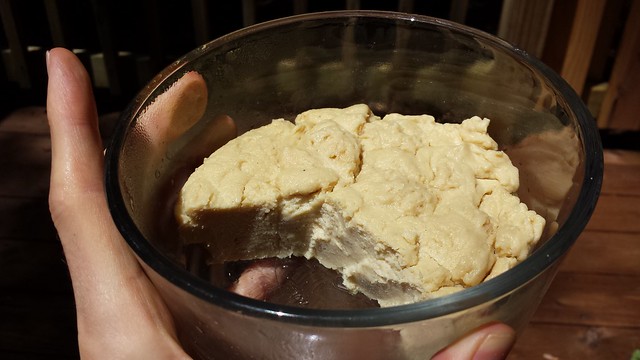
OK, should you spring for the extra $ involved in buying a commercial brie kit from Druid's Grove (still requiring preparation at home, but it's pretty easy), or spend the extra time required to make it from scratch? It depends! Here are the two contenders:

Commercial brie (we made this twice, once with coconut oil and once with deodorized cocoa butter: Vegan brie from druids grove Homemade brie:Homemade vegan brie
Homemade brie in proper context (on homemade foccacia with broccoli and veggie sausage sautéed in red wine. Damn.): Broccoli and veggie sausage on homemade vegan brie and bread

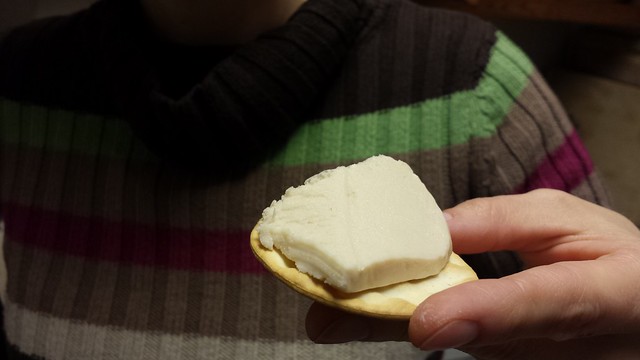
So, the commercial brie has a clearly superior texture and look. It is super smooth and melts in your mouth. Flavor is very mild, no one who knew what brie tasted like thought this cheese tasted like brie, or even like much of a cheese at all. But it was really good on crackers nonetheless.

The homemade brie (I went with the variant that maximized flavor and let it age extra time to really compare with the milder commercial one) was also good, and had more flavor (closer to real brie, but still distant), but not as smooth a texture. I will say that as it continued to age in the fridge it got a really nice sharp taste, and was good in several dishes. Oh, but the cashews do give it a bit of a sweet taste which is uncool.

Ultimately given the ease and texture, we would go with the commercial brie. But at $20?! We will instead focus on homemade cheeses that came out better at home like the gruyere and gouda (also from Miyoko Schinner's book). One downside of both bries is that they are extra-fatty since they have coconut oil in them for texture, and having it in your fridge is definitely encouraging.

Hopefully sometime soon we will have commercially available premade vegan cheese that actually passes both texture and flavor tests. There are a few aged vegan cheeses on the market, but none of them are great, and they're all pretty expensive. Stay tuned!

Monday, November 12, 2012

Trash into treasure: homemade vegetable stock from scraps

Vegetable stock is delicious, but it's expensive to buy and a pain to make. The idea of keeping vegetable scraps to make it from (saving hassle and expense) is an old one, but the scraps always spoiled before I had enough to make a balanced broth. But a few years ago, a friend of ours mentioned that he just keeps the scraps in the freezer until he has enough. Brilliant! We now keep a large tub in the freezer and wait until it's full to make vegetable stock. Using a pressure cooker it only takes about 35 minutes or so to cook (we cook it for 25 minutes on high after it's up to pressure).

Here's what it looks like before cooking:
Vegetable stock

In this batch we had leek greens, parsnip and carrot peels, red and yellow tomato ends, mushroom stems, and garlic ends. Other times we put in celery leaves, sweet potato or butternut squash peels, sometimes even kale stems for health (although inexplicably our dog loves kale stems, so she usually gets those now). Things that are slightly blemished are fine to go in (you'll filter out the solids anyway) even if you wouldn't put them in soup. Just nothing that has spoiled. Also, don't put too much onion / garlic or they can dominate the flavor.

Directions:
dump the big bowl of frozen scraps into a pressure cooker
If you don't plan to compost it in a worm bin afterwards, add some salt (maybe 1/2 tsp) which will help to pull the flavors out
cook on high 25 minutes
strain out into a big glass bowl, use some in a recipe right away if you like (or put in the fridge if you'll use it within a few days). Break the rest up into 2 cup increments and store in the freezer for whenever you need some vegetable stock

We make ours salt-free because afterwards the cooked scraps go into our worm bin. So we get remarkably good fresh veggie broth for free (and by freezing it, we always have some available), and nothing gets wasted since it all gets composted in the end and was just scraps that we wouldn't use otherwise anyway! This is truly one of our favorite kitchen tricks.