Showing posts with label miyoko schinner. Show all posts

Wednesday, July 13, 2016

Vegan goat cheese (chevré), round 2

It's been a while, so I decided to make the goat cheese recipe from VegNews (a modified version of the one in Miyoko Schinner's book) but without the herbs de provence. It turns out making it in summer is pretty different; it ages a lot faster but thickens more slowly! I decided I wanted a different flavor profile so changed up the herbs.

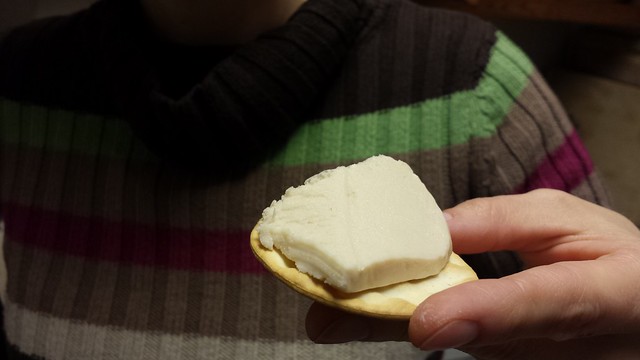
Here's the last of the final product (it is so tasty I usually eat a lot of it before I remember to take a picture):
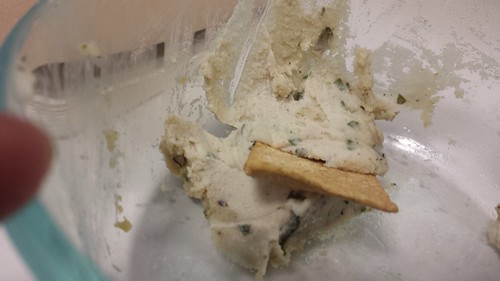
Vegan goat cheese

You need to plan about a week in advance of when you want to eat the cheese.

First, make some rejuvelac:
To make 2 cups of rejuvelac (enough for many cheeses): soak 1/2 cup whole grains (i used quinoa, which makes for a less disgusting flavor than rye or barley or wheat) in 2 cups of water for 8-12 hours. Drain it and fill with more water, changing it 3 times per day, until the grains begin sprouting, then drain again. put the grains and 2 cups of fresh water in a jar and cover with a towel or cheesecloth. Let it sit for 2 days or so, until the liquid turns white, then strain out the grains to have your rejuvelac. It should look like this before you strain it, and you can keep it in the fridge for several weeks:
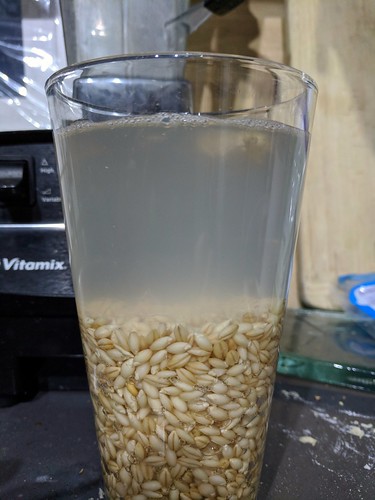
Making rejuvelac

Then soak the cashews (2 cups, raw) for at least 3-4 hours, or overnight.
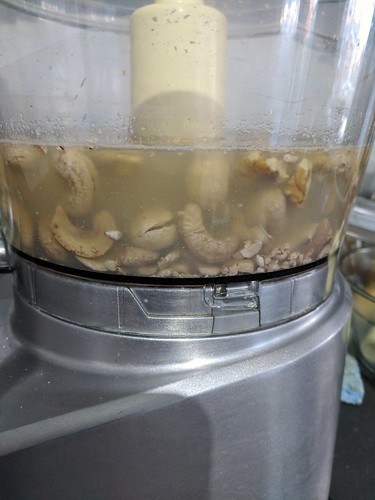
Cashews soaking to make cheese

Then blend until very smooth (I use a food processor, a blender or vitamix works but requires a lot more scraping and pushing and more liquid):
2 cups raw cashews, soaked
1/4-3/8 cup rejuvelac (I use 3/8 to make blending easier, but if you want it thicker use 1/4)
1/2 tsp salt
1 small clove garlic

When smooth, either add these whole and blend for a bit, or chop them up and mix it in. If you blend them all together you will have green cheese which will skeeve people out, otherwise you have nice green flecks as shown above:
~1/4 cup fresh basil leaves
1 Tbsp fresh rosemary leaves
1 Tbsp nutritional yeast
1 tsp lemon juice
whatever other herbs / spices sound good (e.g. in winter I use dried herbs de provence rather than fresh basil and rosemary)

Put it in a bowl, and let it sit out for ~ 24 hours; if it's cool weather you might need 2 days. You want it to start tasting a bit sharp and funky, but not too much. When it looks like this, your bacteria are going nuts (producing those little gas pockets) and you need to move on to the next step:
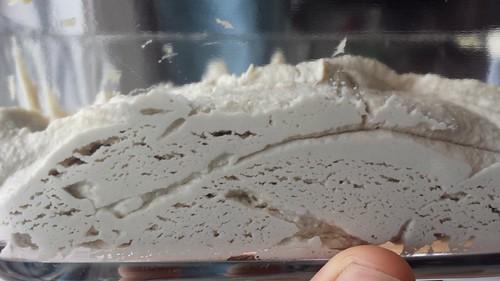
Vegan goat cheese culturing

Now you're supposed to shape this into a log using some parchment paper, but especially if it's hot and humid, you will find that it got funky fast, but didn't thicken up much. But generally it's loose enough I have to just spoon it into a rough log shape on parchment paper and smooth it out. Sprinkle on about 1/4 tsp of salt (ideally powdered in a spice grinder first) evenly over the log. Alternatively, if it's runny enough that it won't hold its shape, put it in the fridge for a day to get thick before making the log. Here's a pic of the pre-aged log, but note the color is weird b/c in this pic I used some walnuts too:
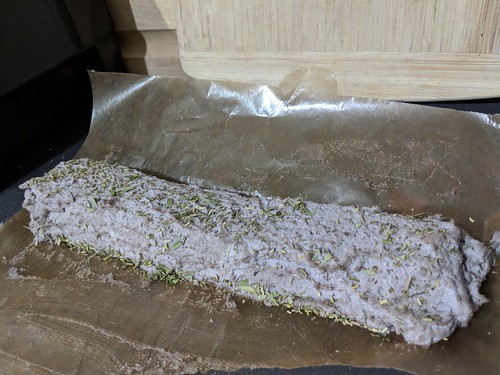
Cashew cheese log
Finally, let it sit out for about 2-3 days until it has thickened a bit and is super tasty. There will be sort of a rind that's thicker and more dry but it's all good.

Saturday, July 18, 2015

Vegan brie-off

OK, should you spring for the extra $ involved in buying a commercial brie kit from Druid's Grove (still requiring preparation at home, but it's pretty easy), or spend the extra time required to make it from scratch? It depends! Here are the two contenders:

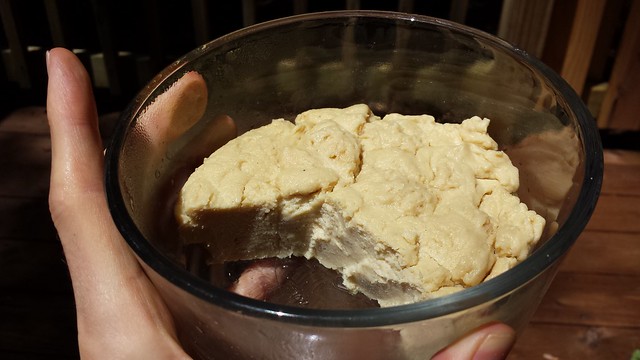
Commercial brie (we made this twice, once with coconut oil and once with deodorized cocoa butter: Vegan brie from druids grove Homemade brie:Homemade vegan brie
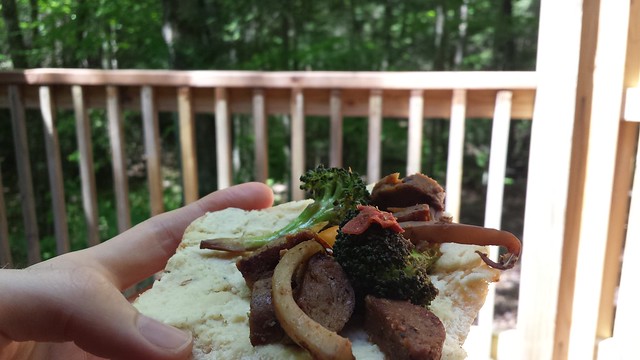
Homemade brie in proper context (on homemade foccacia with broccoli and veggie sausage sautéed in red wine. Damn.): Broccoli and veggie sausage on homemade vegan brie and bread

So, the commercial brie has a clearly superior texture and look. It is super smooth and melts in your mouth. Flavor is very mild, no one who knew what brie tasted like thought this cheese tasted like brie, or even like much of a cheese at all. But it was really good on crackers nonetheless.

The homemade brie (I went with the variant that maximized flavor and let it age extra time to really compare with the milder commercial one) was also good, and had more flavor (closer to real brie, but still distant), but not as smooth a texture. I will say that as it continued to age in the fridge it got a really nice sharp taste, and was good in several dishes. Oh, but the cashews do give it a bit of a sweet taste which is uncool.

Ultimately given the ease and texture, we would go with the commercial brie. But at $20?! We will instead focus on homemade cheeses that came out better at home like the gruyere and gouda (also from Miyoko Schinner's book). One downside of both bries is that they are extra-fatty since they have coconut oil in them for texture, and having it in your fridge is definitely encouraging.

Hopefully sometime soon we will have commercially available premade vegan cheese that actually passes both texture and flavor tests. There are a few aged vegan cheeses on the market, but none of them are great, and they're all pretty expensive. Stay tuned!

Saturday, February 28, 2015

Artisan Vegan Cheeses Review: Gouda, Gruyere, Emmentaler


If you are vegan and ever liked good cheese, chances are you already know about Miyoko Schinner's Artisan Vegan Cheese cookbook. It took a completely new approach to vegan cheese: using bacterial cultures to make the tangy flavors of cheese, rather than simple acids like lemon juice. They're all based on cashews or vegan yogurt or both.

Overall, her cheeses are incredible in terms of flavor, but at the cost of a soft, sort of grainy texture. Regardless, we've made enough of them now I figured it was time for a review.

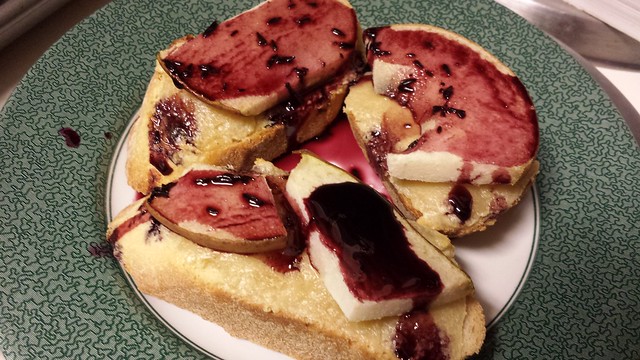
Gruyere: This is probably my favorite recipe so far. It has a rich, complex flavor, a good spreadable texture, and the ingredients are things we already have in stock (although I realize not everyone has coconut oil or deodorized cocoa butter, we have a ton we're trying to use up). It's great on crackers, and really helped out a kugel we made. The picture below is of crostini with "hard" gruyere (still pretty soft), pears, and red wine glaze (recipe is in her book), which were fantastic.

Vegan crostini w gruyere, pear, & red wine glaze

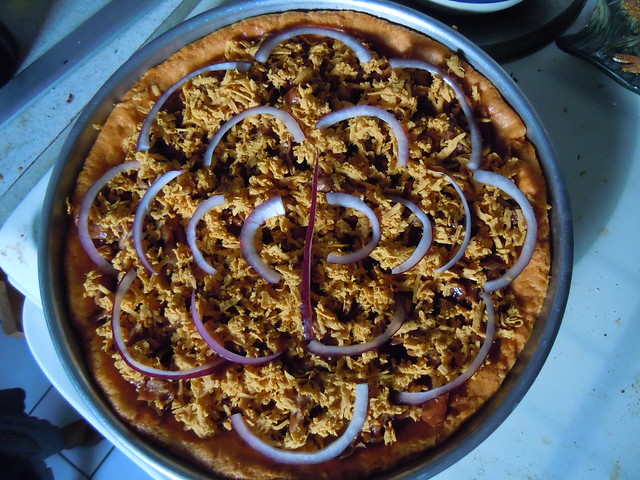
Gouda: Sadly we don't have a picture of this, but I mixed it with BBQ seitan on sandwiches, for a similar effect as this BBQ pizza I made with commercial vegan gouda one time. It is pretty similar to the hard gruyere, but requires yogurt which I'm not a fan of: Also you have to rub the rind with salt before air drying, which I had trouble with, but it still came out really well. Definitely worth eating.
BBQ Soy Curl Pizza (before baking)

Air-dried emmentaler: We had high hopes for this as Sarah loved Swiss cheese. But it just tasted sour and weird. Basically it tasted like yogurt and sauerkraut (understandably, as those are two key ingredients). We tried a few ways to use this up but in the end gave up and tossed it since it was pretty gross.

In the past we've also made the goat cheese, fresh mozzarella, and sharp cheddar (see the write up of our vegan cheese tasting party for details).

Next steps include meltable Monterey jack, getting a "nut milk bag" to strain vegan yogurt to make air-dried parmesan (!), boursin, and camembert.

I also recently made a vegan brie from a kickstarter (see below), which turned out well. It was not very Brie-flavored (it had a very mild flavor, although it was complex and pleasant) but had a great rich texture almost like cream cheese and was nice on crackers. I want to try making it again, and compare it side by side to the Miyoko Schinner brie.

Vegan brie from druids grove

Sunday, December 9, 2012

Vegan Cheese (and wine) Party

When we saw the post about tofu misozuke on recipe renovator, we knew we had to try it. Then VegNews came out with a special issue about making aged vegan cheeses (using new recipes from Miyoko Schinner's new book: Artisan Vegan Cheese), so we figured it was time for a wine and vegan "cheese" party:
Wine & Vegan Cheese Party

Naturally, I wanted to collect data on how tasty and "cheesy" each of our creations were (and look for differences between vegans and non-vegans). Since that data was too interesting to skim over, I posted the full results with some intriguing charts and graphs over on my other blog (Science Jon). For this post, I'm just providing an overview of the homemade cheeses.

Tofu Misozuke
Tofu Misozuke (four flavors)
This was some interesting stuff. As detailed in recipe renovator, these take a while. We aged them for two months to get as creamy a texture as possible. We followed the precise directions for the nori, plain, and red pepper misozuke, but we really wanted to do garlic as well. Since garlic is supposed to be an antibiotic, we were worried it might interfere with the process, but it worked well. We added about 1 tsp of garlic powder and 1 Tbsp garlic vodka / garlic extract (stay tuned for more info on this stuff) to the basic plain marinade. The clear favorite was the garlic, followed by pepper, followed by nori, with plain the least popular flavor. To me most of them had kind of an alcohol flavor which was off putting, and overall these were much less popular than the homemade aged cheeses (see below). But the texture was fantastic.

The next three cheeses were all made with cashews and rejuvelac from Miyoko Schinner's recipes.

Goat Cheese (Chèvre) with Herbs de Provence
Vegan Goat Cheese w/ Herbes de Provence
This was the clear favorite at the party (although vegan lady herself hated it). On a scale from 1 to 9 it got a 7.9 on flavor (even with Sarah's rating of 2 included) and 7.4 / 9 on cheesiness. It took about four days total, and had a great creamy texture, with a nice mild flavor with just enough bite. The herbs were a great touch too. We did 48 hours of aging for the first step, then 48 more hours after all of the other ingredients were added. As a final note, our rejuvelac didn't arrive in time for this one, so we ended up using some vegan probiotic liquid / kefir instead for the first round(which had less of a cheesy flavor). We did add some rejuvelac when we added the final ingredients.

Sharp Cheddar
 Vegan Sharp Cheddar Spread
This was a close second for favorite cheese at the party, and definitely had the most authentic "cheesy" flavor I've ever had in vegan cheese (thanks to the secret ingredient, rejuvelac). I'm not clear why this never firmed up like it should, but it worked well as a spread too (not a "cheesy" texture, but great flavor). We did soak the cashews for almost two days rather than 3 hours since we wanted a smoother texture, so maybe they absorbed too much water? We went with the full 72 hours of aging to develop plenty of flavor, then another 24 hours in the fridge. The mean flavor rating was 7.7/9, and it got a 5.4/9 for cheesiness (mostly b/c of the texture).

Buffalo Mozzarella
 Vegan Buffalo Mozzarella
The nonvegans who knew what fresh mozzarella was like were especially impressed with the texture of this one. It doesn't taste like much (it's not really supposed to), and the texture was soft and creamy. I found it boring on crackers, but the leftovers did work well on vegan pepperoni pizza. It got 6 on flavor, and 5.7 on cheesiness. This recipe started with straining 2 cups of soy yogurt to yield a 1 cup of much thicker yogurt. But when we checked our cheesecloth-lined colander in the morning, none of the liquid has strained out. So instead,  we added an extra 1/2 Tbsp of tapioca flour and 1/4 tsp of agar powder to 1 cup of normal (non-drained) yogurt. Everything else went according to plan (we used 24 hours of aging).

We also sampled Daiya Cheddar wedge, Dr. Cow w/ Blue-Green Algae, Galaxy Cream Cheese, Tofutti Ricotta (we served it cold, but apparently when heated it melts and becomes way better), and Wayfare Hickory Cheddar. We also had Vegan Queso (from Food for Lovers), Sheese Cream Cheese, and Tofutti Cream Cheese, but since those three were unplanned they weren't on the data sheet and not many people submitted ratings for them.

Overall, we decided that the misozuke was too much work and not good enough to make again. If you think of it as a pate rather than a cheese it's better. The other three aged cheeses were all easy enough and tasty enough to make again, especially the cheddar and the goat cheese (although again, Sarah really didn't like the goat cheese). The commercial cheeses by comparison were pretty disappointing overall, but there was huge variety in which cheeses each person loved and hated.